
Polyglyceryl-4 Caprate: The Gentle and Efficient Naturally Derived Emulsifier and Solubilizer
Polyglyceryl-4 Caprate is a non-ionic surfactant that is increasingly popular in the modern cosmetic and personal care industry. It perfectly balances mildness, versatility, and natural origin, making it one of the key ingredients favored by formulators aiming for Clean beauty standards.
Its primary role is serving as an emulsifier (to blend oil and water) and a solubilizer (to dissolve difficult-to-dissolve ingredients into water-based formulas).
Chemical Structure and Source of Polyglyceryl-4 Caprate
- Chemical Structure and Function
✅ Polyglyceryl Ester Family: It is a member of the Polyglyceryl Esters family. Its core structure is PolyGlycerin, which provides the hydrophilic (water-loving) part.
✅ Caprate: The Caprate ($\text{C10}$ fatty acid) is a medium-chain fatty acid typically derived from coconut or palm kernel oil, which provides the lipophilic (oil-loving) part.
✅ HLB Value: This structure gives it a medium-to-high HLB (Hydrophile-Lipophile Balance) value, making it an excellent Oil-in-Water (O/W) emulsifier and solubilizer.
- Natural Origin and Mildness
✅ Naturally Derived: Polyglyceryl-4 Caprate is typically naturally derived, with raw materials sourced from plants (like coconut oil) and synthesized through an esterification reaction.
✅ Mildness: Its non-ionic nature and polyglyceryl structure make it much milder than many traditional synthetic or ethoxylated emulsifiers (like PEGs), resulting in very Low irritation to the skin and eyes.
Core Functions and Applications in Formulations
The versatility of Polyglyceryl-4 Caprate makes it extremely useful across a wide range of skincare and cosmetic formulations:
- Highly Effective Solubilizer
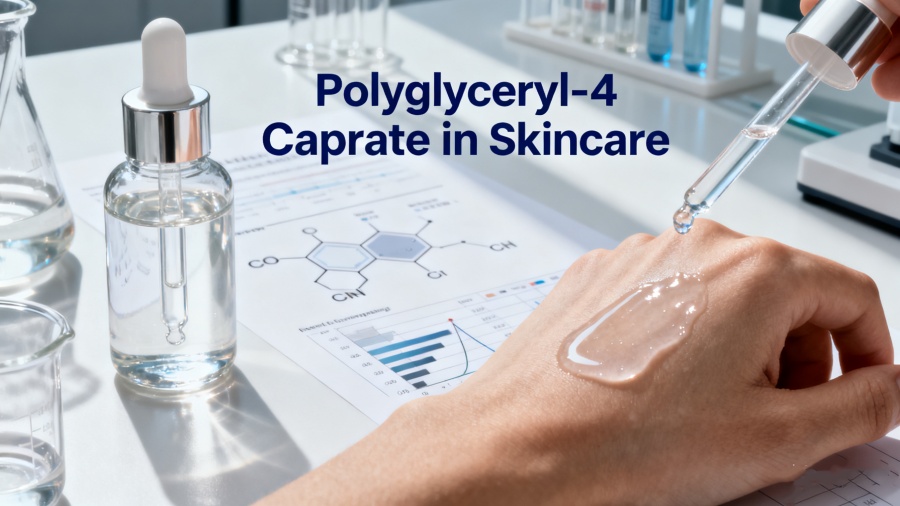
✅ Dissolving Challenging Ingredients: This is one of its most critical uses. It can effectively and transparently disperse water-insoluble ingredients like essential oils, fragrances, botanical extracts, and oil-soluble vitamins into clear, water-based formulas (such as toners, gels, or floral waters).
✅ Maintaining Clarity: Its solubilizing action is vital for maintaining the transparency of the final product, which is crucial for many lightweight products (like refreshing toners or light serums).
- Gentle O/W Emulsifier
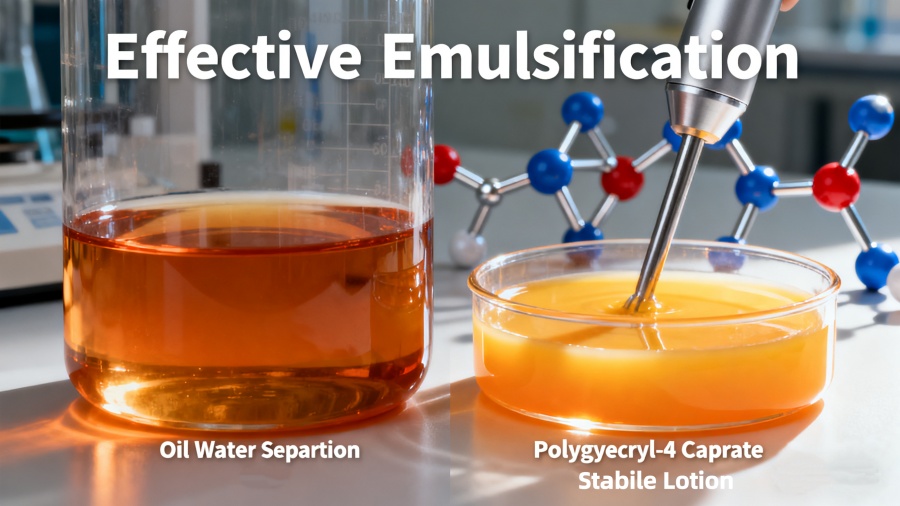
✅ Stabilizing Emulsions: It can be used to create and stabilize Oil-in-Water emulsions (oil droplets dispersed in a water base), forming lightweight, non-greasy creams, lotions, or sprays.
✅ Improving Skin Feel: It can be used in combination with other members of the polyglyceryl ester family or co-emulsifiers to achieve a thin, refreshing, and pleasant texture.
- Mild Cleansing Agent
✅ Micellar Water and Cleansers: Due to its surfactant properties, it also functions as a mild cleansing agent. In Micellar Water and no-rinse makeup removers, it helps form micelles that effectively trap oil and dirt while not disrupting the skin barrier.
✅ Tear-Free Formulas: Its excellent mildness makes it an ideal choice for baby wash products and sensitive skin cleansers.
Advantages Over Traditional Emulsifiers
In today's push for "clean" and "natural" labels, Polyglyceryl-4 Caprate offers clear advantages over traditional synthetic emulsifiers:
- Alternative to PEGs
It is an excellent substitute for PEG (Polyethylene Glycol) derivatives in many formulas. Consumers often view PEGs as chemicals to be avoided, while Polyglyceryl-4 Caprate offers similar functionality with a superior natural origin image and better mildness.
- Eco-Friendly Profile
It has good biodegradability, aligning with current industry demands for sustainability and environmental responsibility.
Common Application Products
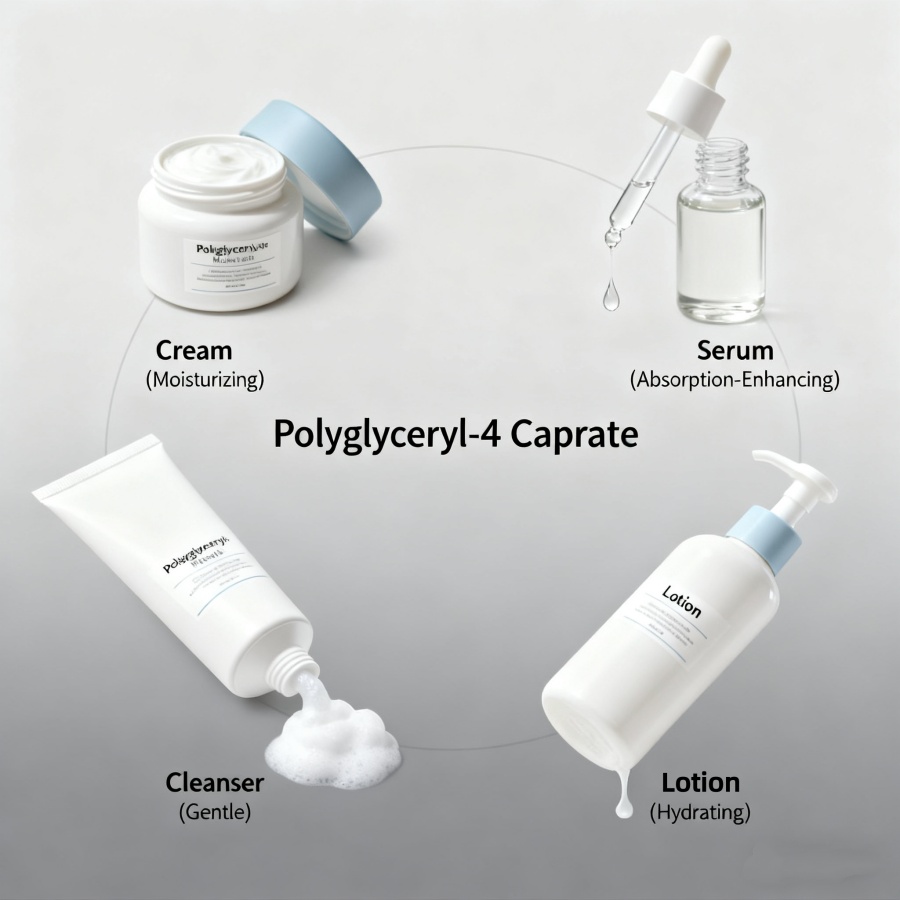
✅ Micellar Water and Makeup Removers
✅ Fragrance/Essential Oil Toners
✅ Lightweight Face and Body Sprays
✅ Natural and Gentle Cleansing Foams
✅ Baby Wipe Solutions
FAQ’S
Q1: Is Polyglyceryl-4 Caprate Safe for Skin?
Yes, it is very safe and highly valued for sensitive skin.
✅ Mildness: As a non-ionic surfactant and emulsifier derived from natural sources (often coconut oil and glycerin), it is known for being extremely gentle and non-irritating to the skin and eyes.
✅ Non-Comedogenic: It is generally considered non-comedogenic, meaning it won't clog pores, making it suitable for acne-prone skin.
✅ Barrier Integrity: Unlike harsh traditional surfactants, it helps maintain the skin's natural barrier function while providing cleansing and hydration benefits.
Q2: Is Polyglyceryl-4 Caprate Toxic?
No, it is not considered toxic.
✅ Safety Rating: Independent cosmetic safety assessment boards generally give Polyglyceryl-4 Caprate a low hazard rating.
✅ Biodegradability: It is considered readily biodegradable, which makes it environmentally friendly and reduces concern about bioaccumulation.
✅ Regulation: It is accepted for use in cosmetics worldwide without restriction on concentration levels, affirming its high safety profile.
Q3: What international brand products contain polyglyceryl-4 Caprate?
Polyglyceryl-4 Caprate is a popular ingredient used globally in a variety of formulas that require excellent solubilizing (dissolving oils into water) and gentle cleansing action. It is particularly prevalent in products marketed toward sensitive skin and those avoiding PEG (Polyethylene Glycol) compounds. Common international brand products that may contain Polyglyceryl-4 Caprate include:
- Micellar Water and Gentle Cleansers
It's a core component in many no-rinse micellar waters (e.g., certain lines from Garnier, Bioderma, La Roche-Posay) where its mild surfactant action is essential for capturing oil and makeup without stripping the skin.
- Toning Mists and Facial Sprays
It's used to solubilize small amounts of essential oils or fragrances into clear water-based toners (e.g., products from brands like Aesop, Herbivore, or The Body Shop).
- Natural/Clean Beauty Creams and Lotions
It helps create lightweight, stable emulsions in face and body moisturizers from brands emphasizing natural ingredients (e.g., Dr. Hauschka, Weleda, Pai Skincare).
Q4: Is Polyglyceryl Natural?
Polyglyceryl-4 Caprate is considered "naturally derived," but it is not purely natural. Here is the breakdown:
- Natural Source
✅ Glycerin (Glycerol): Sourced from plant oils (often coconut or palm) and is the backbone of the polyglyceryl group.
✅ Capric Acid (C10): Sourced from plant oils (often coconut or palm) and provides the "Caprate" portion.
- Manufacturing Process
To create Polyglyceryl-4 Caprate, the natural glycerin molecules are joined together to form a "polyglycerin" chain. This process, called polymerization followed by esterification with Capric Acid, is a chemical reaction.
- Conclusion
Because the material undergoes chemical synthesis to change its structure, it is categorized as "naturally derived" or "plant-derived" rather than "100% natural." This classification is highly valued in the cosmetic industry as it balances natural sources with effective, stable performance.
Summary
Polyglyceryl-4 Caprate is an excellent example of functionality meets ethics in modern cosmetic formulation. With its gentle, efficient solubilizing and emulsifying capabilities, it allows formulators to create clear, refreshing, and skin-friendly products while meeting the growing consumer demand for natural, clean, and high-performing ingredients.
- Name: Daisy Jia
- Email: imaherb@aogubio.com
- WhatsApp: +86-18149253521